Preparation for the Workplace

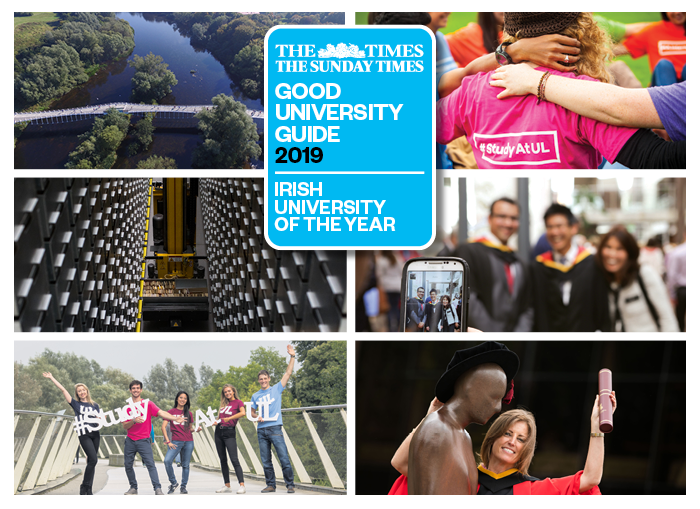
We are almost two-thirds of the way through our MA program in Technical Communication and E-learning, with some outstanding assignments and our summer project remaining. I have been reflecting on what I have learned during my time at University of Limerick (UL) so far. 91% of UL’s recent postgraduate diploma students are either in employment or further study and the university has recently won the Sunday Times “University of the Year” award for the 2nd time in five years. Alistair McCall, Editor of the Sunday Times Good University Guide, said: “Its graduates are among the most employable in Ireland, prepared for work by practical courses and a work placement and internship programme second to none.”
I would certainly agree with his comments on practicality. The course is 100% graded through assignments, I would never have enrolled on this program if it was 100% exam based. All assignments are designed to assess multiple skills and become more complex as the year progresses. Fortunately, some of the first assignments were focused on written skills and I received constructive formative feedback to help improve my proficiency. Real world course work is supported by theory which connects the creativity with critical thinking. Creating podcasts, websites, presentations and eportfolio’s have been challenging but rewarding ways to apply theory studied across this multidisciplinary program.

There is a strong focus on best practice in the workplace and further study throughout the year. We enjoyed visits from various companies and presentations from PhD students on their research. We were asked to interview a professional working in the sector which is the assignment I enjoyed the most. I had a fantastic conversation with an educational technologist working in higher education about her passions, challenges and the exciting future ahead in the field. Another aspect of the course I have been impressed with is the course director Yvonne’s sharing of research she has completed with past alumni on current trends in the workplace. This validates choices around technology, assignments and learning objectives. Darina’s feedback on how she engages with other departments at UL and external projects has also been beneficial during lectures on E-learning theory and practice.

There is an emphasis on the use of technology during the program especially in semester two. This would be an area of weaknesses for me as I usually stick with applications that I know. I have felt out of my comfort zone at times and I am struggling with Dreamweaver the past few weeks. These are good challenges, we all need to be pushed at times to learn something new or explore a new talent. It was interesting to see the focus on technology in our class Twitter feed over the past few months, as students embrace new tools.

The concentration on key transferrable skills is also apparent. Darina mentioned in one lecture that program directors at UL must link key competencies with the program outline for each course and show how they will be assessed. I think this is a fantastic step for higher-education to remain current and relevant to the workplace. Fellow students have questioned the relevance of certain applications we are studying at times. From my experience you cannot learn all applications or all scenarios that you may have to deal with. You need to learn how to be resourceful, creative and develop problem-solving skills and apply them to the task or tool you are using in the workplace.  We have got fantastic support from the lecturers and there is a real focus on students succeeding in assignments rather than ‘being tested.’

I recently visited the careers office to update my c.v. and was asked why I enrolled on the course as I have quite a few years’ experience working in learning and development. I explained how I ‘fell into’ the profession and felt that I did a lot of the right things along the way but now I feel properly qualified. I have never built an E-learning course before and I will be doing this for my summer project. I have written lots of training material, user guides, wiki’s and processes and feel a lot more competent with these tasks now. I feel like I have a career now and will use social media to keep updated with trends and research in the industry.

This time last year I made a big decision to leave my job, take the year out and complete this program. My friends thought I was crazy and my work colleagues first responded that it was a very brave (crazy) decision to make and later all admitted that they would love to do the same thing. One of the main reasons I left my job was because I was no longer learning anything new and never had time to implement new ideas due to constant repetitive tasks. I saved hard for six months, bought a new laptop and desk and must admit I’m delighted!

I have spent seven of the last 20 years as a stay at home parent and the rest of the time working full-time with four children, both very demanding roles with little time for learning or reflection. This sabbatical from that lifestyle has been difficult at times but very refreshing.  I feel reinvigorated towards my career, have broadened my perspective on my subject and learned so many new skills. Thanks to this excellent program I feel a lot more employable than I did last year and it has also rekindled my love of learning which I will continue to foster. Hopefully in ten years’ time when my children graduate from UL and are starting out on their careers, I will take another ‘gap year’ and work as a volunteer in Asia or Africa. That will be crazy!


My experience as a Blended Student

This week in EL6052 our lecture was on e-moderating online and blended courses which may be a key task for many of us in the future. Facilitation and scaffolding are keywords used by Gilly Salmon in her five stage model of teaching and learning online for interaction with students. Her model details the different stages students will go through and what levels of support they will need. Some critics feel that her model is just designed for fully online learners and doesn’t focus on other types of learning. I feel that her five stages could theoretically be applied to blended and classroom training also.

A short video of Gilly Salmon explaining her model

In my previous role working in Learning and Development in the corporate world, most of our training was classroom based with approximately 10% online. In the classroom training we used Moodle on a daily basis so students could follow the training material, learn how to use knowledge bases and take assessments. Students had to learn how to use various other systems and software applications. All of this required technical support for access issues and motivating students to use the systems in the correct way. Some students needed a lot of help due to poor computer literacy. Socialisation was really important in the classroom. I have always felt that students learn better within a group where there is a respectful environment and we spent a lot of time ensuring that students got to know each other and were relaxed in the classroom. This ensured that they would ask questions or request help when needed.

The trainer approached the students as a facilitator ensuring that everyone participated, shared experiences and helped each other through the modules. Through the active learning phase the trainer would ensure that everyone was on-track and would facilitate problem solving sessions. This would move to students being responsible for their own learning at the end of the program when they were starting to perform on the job tasks.

Even though I have attended most lectures for my blended MA program, I use the Virtual Learning Environment (VLE) to review lecture material, submit assignments, complete e-tivities and engage in forums. I love the mix of both. Having all the material available on the VLE is really useful and being able to easily contact lecturers for questions is fantastic. Lecturers were very supportive at the start and ensured we could access all systems at orientation. Online socialisation was achieved through introductions and an information exchange was facilitated through research proposal feedback and discussion. We are currently in the latter stages of the model but if we have to complete a new task we would likely be back at level 1 again. The model is fluid.

I feel I get a lot out of the lecture by being in the classroom and enjoy the interesting discussions on the subject matter. The personal contact with the other students is priceless. Last Tuesday we were really stressed so a trip to the market for a lunchtime therapy session and discussion of the assignments we were working on made everyone feel better. For me the blended model is a great mix, I’m not sure how I would cope with this course fully online.

References

Salmon, G. (2004) E-moderating the key to teaching and learning online, 2nd ed. London: Routledge Falmer.

Using Twitter as a Learning Tool

Most of the work has been completed on our virtual team project and we will be submitting our completed document next week. We designed a Twitter User Guide and our aim was to create a guide that would help a new user get setup and start using Twitter. While it’s not perfect, I think the end product is a useful document. We choose this topic as only one person on the team had used Twitter previously and he was a recovering twitterholic who had mixed feelings on the platform. The rest of us had just set ourselves up and weren’t quite sure what we were doing.

Now that I have been using it for almost two months I’ve started to think about Twitter as a learning tool for students. There has been some research on this topic and it is getting more popular in third-level colleges.

I like twitter a lot more than I thought as I’m not a fan of social media. I can see the value of using this tool in our course. It broadens horizons as different students have different backgrounds and will gravitate towards certain topics to post each week. Its brilliant to see such a broad range of interesting topics and I have lots of tweets ‘liked’ to read later when I have more time. I’d love if the application had a ‘keep’ or ‘favourites’ button rather than ‘like’ to bookmark these, it would be a little less judgmental.

The timeline also annoys me, is it ever in sequence? Apart from those two little criticisms I find Twitter is so easy to use which makes it a good choice for students, it shouldn’t stress them out too much. It’s defiantly a great networking tool, you can follows others in the industry and develop a professional identity. Is it a good learning tool?

E-Leariningindustry.com says that it is a good tool to engage people who like social media and the mobile version makes it really accessible. I love the fact that if you have 10 minutes to spare anytime of the day or night, you can browse, send a tweet and complete your weekly twitter assignment. I also think it would be really useful for communication on a course where there is no VLE.

Eva Kassens-Noor, an Assistant Professor at Michigan State University completed an exploratory study on using Twitter to enhance learning in higher education in 2012. Third-level colleges were encouraging staff to use Twitter to “enable interactivity, excite learners and foster greater student participation”. She examined if it aids in-class learning. She looked at how students apply, create and retain knowledge when using Twitter compared with more traditional methods.

She discovered that in some contexts Twitter will better aid students to learn compared to more traditional methods, however, in other contexts it would hinder them. She felt it worked well for engaging students in theory and practice focusing on real-world examples. In contrast if the instructor intends to foster critical, in-dept and self-reflective thinking among students, Twitter would be unsuitable.

I think that Twitter can be a powerful tool for educational purposes. We have created a really useful community of learning that I hope will continue past the assignment completion date.

References

Kassens-Noor, E. (2012) ‘Twitter as a teaching practice to enhance active and informal learning in higher education: The case of sustainable tweets’, Active Learning in Higher Education, 13(1), pp. 9–21. doi: 10.1177/1469787411429190.

Minister, L. (2014) Using twitter as a learning tool,
elearningindustry.com, available at: https://elearningindustry.com/using-twitter-learning-tool

Retaining students in third level education in Ireland

Why do students in Ireland leave their third level courses? According to a 2015 study on ‘why students leave higher education in Ireland by UCD, Ireland has a relatively high retention rate of 78%, however, every year one in six or 7000 undergraduate students fail to progress to the second year of their course. Responses from over 4000 students were gathered to find out the reasons why students leave. I’m sure you can guess the number one reason. Yes, you’re right, over half of the students left because they felt they chose the wrong course for them. The other key factors were listed as personal, financial, health and family reasons.

I have always felt that career guidance in secondary school is very poor, there is very little one on one time. We need to devote more time to students at 16 and 17, at the start of the senior cycle to help them recognise their interests and skills. Students need to know more details of the course content they are planning to study. Employers need to be more willing to engage students with comprehensive transition year programs.

The National Forum completed a smaller scale study in 2016 and they found similar results. Worryingly when they asked students who they spoke to about their decision to leave, most students did not consult relevant institutional supports or those available in the students’ union. Students were unaware of such supports or did not feel they would be helpful. The study recommended that university staff be empathetic with students looking for help. It also advised institutions to communicate existing supports for students in a more direct way as students felt they wouldn’t get the support needed.

In EL6052 this week we discussed Learner Support in third level education. I have to say that I was been pleasantly surprised by the range of learner support available to students here at UL. There is plenty of academic tutoring available e.g. writing workshops, research skills, maths and science tutorials. We need to ensure that students are availing of these early to help them build up their skills. There is also a wide range of non-academic support available e.g. free counseling, careers advice and installment plans for paying fees. The first seven weeks program is fantastic and is UL shouting from the rooftops in bright orange t-shirts with the message that we know the transition to third level is hard, we are here to help.

Being a mature 40 plus second time around student, I know that I will ask for help if needed. I feel extremely lucky that I could approach any of my lecturers for advice if I needed to. Universities need to ensure that all students feel the same. Stuff happens in all our lives to challenge us. Students should feel that they are part of the college community and will be supported to deal with problems.

The National Forum report concludes that student services require enhanced funding to ensure adequacy of provision, availability of staff at appropriate places and times, and the visibility of the service from the student and staff perspective. I feel that not all students will stay on to complete their studies, however, engagement builds resilience in students and teaches them to solve problems for themselves, an important life lesson.

References

Moore-Cherry, N. M. (2015) Why students leave higher education in Ireland, available: https://www.researchgate.net/publication/294090617_Why_students_leave_Student_non-completion_in_higher_education_in_Ireland [last accessed 26 February 2019]

National Forum for the Enhancement of Teaching and Learning in Higher Education. (2016), “Reaching Out: Why Students Leave,” in teachingandlearning.iehttps://www.teachingandlearning.ie/publication/reaching-out-why-students-leave/  [last accessed 26 February 2019]

Contemplating Writing

"When you know better, you do better" Maya Angelou

I'd Rather Be Writing - Tom Johnson

Technical Communication Blog / Technical Writing Blog

Community – Edublogs – free blogs for education

"When you know better, you do better" Maya Angelou

TWO WRITING TEACHERS

A meeting place for a world of reflective writers.

Blog of Stuff for Digital Education

Your home for the mad ramblings of a Higher Education student

Learning with 'e's

"When you know better, you do better" Maya Angelou

Design a site like this with WordPress.com
Get started