Finally Submitted!

Thankfully, our virtual team project was finally submitted on Monday. This project was a roller-coaster and I found the student experience very different from the workplace.  The deliverable was very simple, but the journey had many elements and overall, I feel this comprehensive project is worth including in our MA program.  Project management, collaboration with colleagues, communication skills, use of technology, writing, editing, translating, critical thinking and graphic design were among the skills needed on the team for a successful outcome.
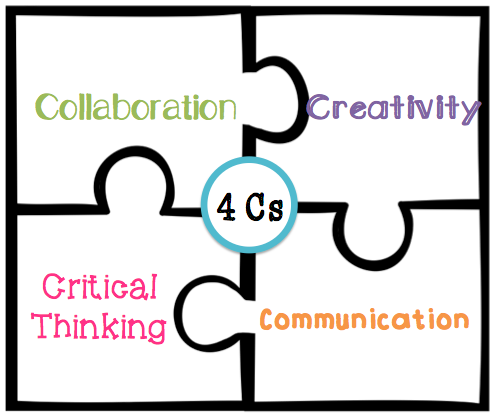
The 4 C’s of Education, certainly needed on this project

What new skills skills have I developed?

I have a better understanding of how to write for translation from working on this project. It’s an important skill for technical communicators and something I have never thought about before.

I wrote part of the instructions and I know I did a good job, there was only one edit, however, I did learn from our editors on this project. They did a great job creating a style guide once they realised how disparate some of the writing was and worked hard to make the document feel like it came from one writer. They were meticulous with wording and taught me how to keep everything consistent throughout the document and eliminate unnecessary words. This is something I have been working on since September!

I have also learned how to approach project management and clearer guidelines should have been set out from the start. I found this great article on creating a style guide, design information and documenting the process which would have been a really useful guide for us.

Leadership on our project

We had a leader for each university on our team and in hindsight we should have had an overall project manager. As the team leader for the UL side I got the project started and created a project plan. As we had no overall manager, checking in with everyone took a lot of time and the editors were left with a lot of the decision making. One of the Paris students never engaged so their leader was our only contact point for translation. In Florida one of the students was very engaged and the others less so.

Project Management tools & collaboration with translators

Overall the tools worked well. We used Big Blue Button for calls and Slack to collaborate. I also developed a Gantt chart at the start of the project which clearly showed the due dates, holidays and task list which was very useful.

The lead translator was on the initial conference calls, but she had no experience ‘writing for translation’ and had no advice to offer.  She was involved in choosing the topic and took a step back during the writing process. Engagement was poor during the translation phase until the very end of the project where she needed a couple of clarifications on sentences using Slack. Slack was our main collaboration took and generally worked well. It did get a little confusing at times and would have worked better with an updated action list. Slack was useful for feedback between the writers and editors and we set up private channels for this task.

We also used Google Drive for storing each version of the document and adding comments for editing which worked well in conjunction with Slack. No-one else on the team had access to the graphics tool chosen by the designer, until late in the project when one of the Florida students got access through her workplace so she could make necessary changes.

Creativity

Freedom to choose a topic, assign roles, select tools and develop our own plan is one of the strengths of this project. It forces collaboration and decision making from the beginning and teams must take responsibility for choosing their own path. It’s also a great opportunity to use new tools for a real project.

The graphic design element of the project should have been more creative. This never happened on our team unfortunately, one of the students had experience in graphics and put himself forward for that role. There was little engagement with the rest of the team on design and most of the feedback was never implemented.

The most valuable lesson I learned

I have managed my own team in the past, but never multidisciplinary teams. This project has taught me the importance of teams having clear guidelines on everyone’s roles within the team and exactly what is expected of each person, how they will communicate and collaborate with the rest of the team. Additionally, having a key decision maker in the group would have been useful for final sign-off of the document at various stages.

What to do differently

Hindsight is fantastic and having two graphic designers on the team should have made a big difference to the success of the project.

A master document to track all actions, no matter how small they were, would have worked well. There were times towards the end of the project when members were making the final updates which had been agreed on Slack, yet some of the tasks weren’t complete or there was confusion over exactly what needed to be done.

A style sheet was developed after the first writing phase. This would have been more useful before we started writing.

Motivation during the project

I was really motivated for most of this project, as we had good engagement, created solid relationships and developed well-written instructions. I like being part of a team and sharing achievements is great when everyone is working hard to realise the goal. At times it was difficult to keep motivated as we were so badly let down by the graphics designer towards the end of the project. It was really demotivating for the editors to have all their work ignored on the first design draft and I felt their pain. The designer going for two weeks holidays without giving notice to the rest of the team and saying they were only putting 20% effort into this project because that was all it’s worth was certainly unhelpful. I am disappointed with our final submission, which is demotivating for many on our team due to the amount of time spent on the project and we know this will affect our grade.

Completing projects with remote workers will be part of everyone’s future and I’m glad we had this opportunity. I feel more competent about anticipating issues that may come up in the future in a similar project. Those who disengaged from this process certainly lost out on valuable learning.

References


Hollis Weber, J. (2011)
Developing a Departmental Style Guide TechWhirl.com, available at https://techwhirl.com/developing-a-departmental-style-guide/ [last accessed 1 April 2019]


Wrapping up the Virtual Team Project

This is the penultimate week of our virtual team project and it’s been testing for most of our group. Perfecting teamwork is a challenge. We have had various levels of engagement over the past few weeks. Some team members have worked really hard on the project, I think the editors probably contributed the most. Some teams members are great at keeping in touch on Slack, others don’t. We have had sporadic updates from one of the French team. The other student hasn’t engaged.

Our graphic designer changed all the text and left us with a document that we couldn’t edit and went on holidays. That was the low point until he commented that he was only giving 20% to the project as that’s all its worth. We’ve sunk even lower.     

One of the US students, who has been great throughout the project got access to the editing software and had a list of issues to fix. Great news, until she sent back the document with graphics are all over the place, no numbering for each step and section 3 was still incorrect. It’s now 48 hours before the deadline and we have no cover page, no alignment on the graphics, no numbering and most of us are losing the will!

I understand why we are doing this project and ultimately it’s very beneficial. It’s also very frustrating. Cleary and Slattery’s (2009) article on virtual teamwork has “uncooperative and non-participating team members” recorded first on their list of challenges for students on this project. My experience defiantly concurs. Work experience has also been a challenge for us. Apart from one or two part-time students there is very little experience on our team with the different stages of this project. In hindsight we should have designated a project manager rather than a project lead from each site.

What has been good to see over the past few days is most people are pulling together and some of the student who rarely engaged much are now asking how they can help. Hopefully our document will be in better shape by Monday evening. After all the planning, writing, editing and time spent it would be a shame if it’s not at least 80% good enough.

References

Cleary, Y. and Slattery, D. (2009) ‘Virtual teams in higher education: challenges and rewards for teachers and students’, in 2009 The All Ireland Society for Higher Education, available: https://ulir.ul.ie/bitstream/handle/10344/7268/Slattery_2009_Virtual.pdf?sequence=1 [last accessed 23rd March 2019]

Using Twitter as a Learning Tool

Most of the work has been completed on our virtual team project and we will be submitting our completed document next week. We designed a Twitter User Guide and our aim was to create a guide that would help a new user get setup and start using Twitter. While it’s not perfect, I think the end product is a useful document. We choose this topic as only one person on the team had used Twitter previously and he was a recovering twitterholic who had mixed feelings on the platform. The rest of us had just set ourselves up and weren’t quite sure what we were doing.

Now that I have been using it for almost two months I’ve started to think about Twitter as a learning tool for students. There has been some research on this topic and it is getting more popular in third-level colleges.

I like twitter a lot more than I thought as I’m not a fan of social media. I can see the value of using this tool in our course. It broadens horizons as different students have different backgrounds and will gravitate towards certain topics to post each week. Its brilliant to see such a broad range of interesting topics and I have lots of tweets ‘liked’ to read later when I have more time. I’d love if the application had a ‘keep’ or ‘favourites’ button rather than ‘like’ to bookmark these, it would be a little less judgmental.

The timeline also annoys me, is it ever in sequence? Apart from those two little criticisms I find Twitter is so easy to use which makes it a good choice for students, it shouldn’t stress them out too much. It’s defiantly a great networking tool, you can follows others in the industry and develop a professional identity. Is it a good learning tool?

E-Leariningindustry.com says that it is a good tool to engage people who like social media and the mobile version makes it really accessible. I love the fact that if you have 10 minutes to spare anytime of the day or night, you can browse, send a tweet and complete your weekly twitter assignment. I also think it would be really useful for communication on a course where there is no VLE.

Eva Kassens-Noor, an Assistant Professor at Michigan State University completed an exploratory study on using Twitter to enhance learning in higher education in 2012. Third-level colleges were encouraging staff to use Twitter to “enable interactivity, excite learners and foster greater student participation”. She examined if it aids in-class learning. She looked at how students apply, create and retain knowledge when using Twitter compared with more traditional methods.

She discovered that in some contexts Twitter will better aid students to learn compared to more traditional methods, however, in other contexts it would hinder them. She felt it worked well for engaging students in theory and practice focusing on real-world examples. In contrast if the instructor intends to foster critical, in-dept and self-reflective thinking among students, Twitter would be unsuitable.

I think that Twitter can be a powerful tool for educational purposes. We have created a really useful community of learning that I hope will continue past the assignment completion date.

References

Kassens-Noor, E. (2012) ‘Twitter as a teaching practice to enhance active and informal learning in higher education: The case of sustainable tweets’, Active Learning in Higher Education, 13(1), pp. 9–21. doi: 10.1177/1469787411429190.

Minister, L. (2014) Using twitter as a learning tool,
elearningindustry.com, available at: https://elearningindustry.com/using-twitter-learning-tool

Using Slack for your Virtual Team

Virtual team working is becoming more popular in technical communication, e-learning and many other disciplines. Whether it is the ability to work from home some days or a fully distributed team of co-workers or clients, we should think about management of people, process, leadership and tools. A  good collaboration tool can help your team achieve higher levels of engagement and work ethic than an office based team.

In our virtual team project we are using Slack, which is a cloud based team collaboration tool. We use the free version of Slack, there are also two options where you can pay monthly or annually for premium level products. In the free version of Slack you can have unlimited members, however, it does have some limitations. You can only voice or video call one person, so you will need another tool for conferencing. The storage is limited to 5GB for uploads across the team and searching previous messages is restricted to the last 10,000. The free version was perfect for what we need and what I really like about it, is that it doesn’t keep reminding you that you are using a free version and doesn’t constantly send you special offer emails to upgrade.

So how does Slack work?

Slack is a messaging tool on steroids. Teams or organisations set up channels for different projects or tasks. You can have invitation only channels for certain projects that some members don’t need to see. We used this in the editing phase of the project, where feedback was shared between the editors and each writer privately and it worked really well. You also have a direct messaging channel with each person for private interactions.

Messages can include documents which is really useful or links to other tools. You will know you have a new message as the channel or direct message will be in bold. You can setup notifications if you wish, I chose not to. The use of emojis is encouraged and really useful if you want to give an idea the thumbs up or down.  You have the option of starting a message thread to link conversations together which helps keeping track of discussions. You can also set reminders to follow-up on a message or pin important messages.

Why you should use Slack

Important Considerations

Teams will need to learn how to use it and decide what to use it for. Think about naming conventions for your channels to make it more intuitive. We had too many channels on our project and some weren’t used. There is an informative analytics space where you can see what channels are being used and when. This could be useful for project managers in larger projects or organisations. You may want to have a ‘water cooler’ channel for chit chat. We did this on our project and it was used sporadically. I feel it’s important for teams to work out how to engage on Slack, for example, deciding when to use private messages or encouraging everyone to set their status if they are away from the office or on vacation.

What else is good?

You can integrate up to ten applications on Slack. We are used Google Drive and Survey Monkey which proved really practical. There is also a whole section on keyboard shortcuts. Anyone born in the 70’s will love these! The help section works well, in fact every time you log in you get a tip from your friends at Slack. These are worth reading as you may get “you look good today” or “Happy Friday” messages which are so much nicer than a traditional loading screen.

What’s not so good?

There were a few niggly things. I keep hitting the return key on my keyboard, which posts my message. It’s annoying. Luckily you can edit your message and post again.

You can set follow-up reminders for messages, however, there is no task management element, you will need another application for that. Sometimes channels do get out of hand and are difficult to follow.
The free version is perfect for our college project but could be insufficient in the long run, especially if you are sharing lots of documents.

Overall, it’s a great tool, it looks cool, promotes social interaction and should cut down on the need for meetings to keep everyone in the loop. That’s defiantly a winner!

Where is all the text gone?

“Graphic Design uses visual media such as pictures, decorative words or animations to convey a message” according to the American Institute of Graphic Arts (AIGA). In our virtual team project, one member took on the role of graphic designer of the instructions we developed. I have previously written about the challenges of this project and for me, the biggest challenge remains the same. What is everyone’s role and how do we work together to achieve the best end product?

The role of the technical writer has changed since in the last 20 years due to the internet and globalisation. We are now technical communicators and information design is a key function of the job. The function of the text has been reduced. Think of the signs and symbols you see every day for no parking or exits, or the textless IKEA instructions for your new Billy bookcase. Videos and podcasts are becoming more and more popular for customer help and support. That’s all great for the future but this deliverable is mainly about the text.

Our team project is focused on creating a set of written instructions of at least 900 words to be translated into French. That was the brief. We have a team of writers who wrote different sections of the text. Our two editors worked really hard to fix the mistakes, reduce the word count and give the text a consistent feel. We agreed on a style and were excited to see the finished product complete with graphics. First impressions were great. Great colours, lots of white space, clear layout, text boxes and screenshots are all aligned. Wait a minute, where is all the text gone? 1000 carefully chosen words that had been rewritten and tweaked for a week were unrecognisable. Now we had pieces of incomplete text with incorrect grammar, no structure or flow. The graphic designer thought this was a ‘quick reference guide’. It’s not! Read the assignment brief!

It all comes back to communication and assumptions. We assume that everyone knows their role. The graphic designer should take the content and make it graphically more presentable, not fit parts of the text into a template. I never envisioned this could be a problem. Another great lesson this project has taught me is how to approach working with a graphic designer.

My top five guidelines for working with a graphic designer

Establish timeframes.

Set deadlines for the first draft and each subsequent stage.

Provide background information.

The more information you provide about the audience and use of the item to the designer will help them create a useable product.

Review the first draft.

It may not be perfect. Give the designer specific feedback on the components so they have a clearer vision for subsequent drafts.

Collaborate.

Ask questions, e.g. why did you choose that image or colour? Maybe you are missing something.

Be realistic.

Know when to say ‘we’re done’. It may not be perfect, but it may be good enough.

The editor in Technical Communication

Last week, after learning the basics of how to write a document for translation, I started to think about the next step. We have two editors on our virtual team, both of whom are working in the industry and sound like they know what they are doing, but what actually is the role of an editor in technical communications and what makes a good one?

Rude and Eaton (2010) believe that the editor is a specialist role and they are experts in communication, language and the needs of the audience. They also state that a good editor can evaluate the big picture as well as the finer details. These experts are just what we need on our team as we had five writers from different continents working on the same document. Our finished product needs to have one voice, correct grammar and be useful to our target audience.

The Audience

The editor needs to consider the documents purpose and how the readers are going to use it. The document needs to be structured so that readers can find information quickly. Does the document need a hierarchy to make it easier on the reader to find simple information first? The document also needs to function correctly. Are the steps in the right order? I know when the editors were reviewing our written instructions the functional edit took longer than expected.

Safety notices must always be included and the editor should also be graphically aware, not experts but have an understanding of how the design elements will work with the rest of the document.

Working with the writers

In our project, the editors were involved from the start and collaborated on key decisions to be made regarding the written instructions. They also gave advice and feedback during the writing process which was very beneficial and they drafted style tips for us to follow. They then set up a private channel on Slack for each writer to receive edit feedback on their first draft. This process has worked well even though there were delays with some of the writers. It’s important to be tactful when giving feedback to a writer. I like the praise sandwich. This ensures that plenty of positive feedback is given surrounding the negative information. New writers will make lots of mistakes at the start, the editor needs to recognise this and give them praise where its deserved.

Getting feedback from the editors

I’m sure it’s frustrating for writers who have spent lots of time working on a document to get it back from the editor with loads of notes. Take the time to go through the notes carefully. The notes are not personal, the editor has a duty to make the end product as good as it can be. If you’re unsure about some of the comments, ask for clarification. Work through the changes. You will end up with a better document and you may learn something along the way.

References:

Rude, C. and Eaton, A. (2010) Technical Editing, 5th Ed, Longman

Technical Writing for Translation

Our virtual team project has been moving along nicely. Some students are keeping to fringes, however, they are getting the tasks completed on time. We’re getting to know each other a little better also. This week we focused on writing the instructions for how to use Twitter. Nobody had worked on this type of project before, so we were unsure how to approach it. We had 4 writers, so the topics were divided up. We agreed to write in US English and for the desktop version of Twitter.

All the first drafts were so different in words, voice, style and format, how would we even start putting the final document together. Of course, what we should have considered was a style guide or at least some basic tips on writing instructions for translation. Towards the end of the week, our editing team devised a list of tips we should follow when revising our first draft. They make so much sense. Hindsight is a great thing. There is nothing like learning from your mistakes.

My tips for writing instructions for translation:

  • Write short simple sentences in the active voice. Fewer words also keep your translation costs down.
  • Use plain English e.g. ‘enter’ instead of ‘input’.
  • Use terminology consistently.
  • Use visuals as much as possible.
  • Leave plenty of white space to allow space for longer translations.
  • Decide what will stay in English e.g. Twitter, Follow.
  • Avoid idioms and acronyms.

Socioemotional Communication in Virtual Teams

In week 2 of our project we made a lot of progress on certain levels. We had a team agreement and an approved list of technology. We had team roles defined and an overall strategy. The focus for this week was for team members to engage on Slack and select a topic for our instruction document. A call was organised to choose the topic and plan for the next steps. Not everyone would make the call, however, most students had expressed their preferred topic online and Setting up Twitter for a New User was agreed on.

Although there was a good collaborative atmosphere on the call, discussions were largely task and procedure orientated. Since reading Flammia et. al.’s article on socioemotional communication strategies I have realised that this aspect of virtual teamwork can be improved on in the coming weeks. The research found that students who worked on socioemotional communication enjoyed the project more than others. I start to think about how we can develop better connections among the group.

I understand that we are somewhere between the forming and storming phases of establishment and we have had fabulous introductory emails, students sharing photos on their Slack profiles and lots of emojis and thumbs up. Feeling that we need to go a little deeper I look online for some ideas and found an interesting blog on the topic; https://blog.retrium.com/10-ways-to-improve-virtual-collaboration.

‘Create virtual water coolers’ was one of the suggestions. My teammate who setup Slack added a ‘random’ channel for this purpose, but we need to start using it. Managing time zones and schedules was another idea. This week we are gathering students available time, so we can best schedule conferences. Calls are currently recorded, and minutes are circulated which is great but being present is so much better.

We probably just need a little more time, chats about the weekend and some minions memes!

References

Flammia, Madelyn et al. (2010) Leadership Roles, Socioemotional Communication Strategies, and Technology Use of Irish and US Students in Virtual Teams. Professional Communication, IEEE Transactions on. [Online] 53 (2), 89–101.

Setting up a Virtual Team

I have worked in virtual teams before in the corporate world. Usually what you get is a self-assured project manager who loves to delegate and take control and a team who all have a defined role and know what the project is all about.  In EL6082 we have a diverse project team of students from Limerick, Florida and Paris, all studying different courses through conventional and distance learning, working on a project of our own choosing. There are so many variables, different assignment instructions, time zones, languages, skills, personalities and motivations, it looks like quite a challenge.

Week 1 has been a little frustrating. Evanna got us off to a great start with an introductory email and all UL students responded over the weekend. Then we waited and waited for the US and French students. There were issues accessing the Google Drive folder that had been setup and once these were sorted we felt much better.

By Thursday morning, I was a little anxious to get started and we had four students that hadn’t made contact and no plan! One of the team suggested using Slack to get started and agreed to set it up. This was great news as Slack is probably the most talked about collaboration tool right now and I have been hoping to try it.

One of the team suggested using Big Blue Button for calls as they have experience with it. As you know I love the internet, how would we get anywhere without google maps? On the downside though, internet conferencing can be a frustrating experience for all involved. This software was a little intermittent and the screen was rather cumbersome and some students couldn’t get their microphones to work. The call was long, and no-one really knew what the expectations were, however, we got going and the students on the call all chose roles and started to work on the team agreement. I took the role of project manager with the caveat that if anyone else wanted the role I was happy to hand over to them. Funnily enough, this hasn’t happened yet. I do like to step up and get organised, we don’t have much time to waste over the next few weeks. I thought it would be good for collaboration to get everyone on Slack and start to think about a topic. A project timeline was completed and by the weekend almost everyone had got in touch.

So, I need to be the self-assured delegator who takes control. A difficult task with such a short timeline and a large group of people completing a task that is unfamiliar to most of us. On the plus side, all the students seem like a wonderful group of people and have been really open about their strengths and weaknesses and forthright in sharing their experiences and preferences. Week 1 – People 1: Technology 0.

Contemplating Writing

"When you know better, you do better" Maya Angelou

I'd Rather Be Writing - Tom Johnson

Technical Communication Blog / Technical Writing Blog

Community – Edublogs – free blogs for education

"When you know better, you do better" Maya Angelou

TWO WRITING TEACHERS

A meeting place for a world of reflective writers.

Blog of Stuff for Digital Education

Your home for the mad ramblings of a Higher Education student

Learning with 'e's

"When you know better, you do better" Maya Angelou

Design a site like this with WordPress.com
Get started